
Updated October 1, 2026
There is no single price for a turnstile. A basic tripod for a back-of-house door and a bank of high-security optical lanes feeding a data center floor are both turnstiles, and they can sit thousands of dollars apart per lane before a single reader is wired in. What a turnstile costs comes down to the barrier and security level, the lane width, the detection intelligence, the finish, the readers, and how it ties into your existing systems. The per-lane number on the quote is only part of what the system costs to own. Most vendors won’t talk pricing until you’re deep in a sales cycle, which leaves you comparing a quote you already have against a category you can’t get a straight answer on. This guide breaks down what actually moves turnstile pricing, why installation and integration often cost as much as the hardware, and how to weigh a low sticker price against what a lane costs to run over its life.
What you’ll learn in this article
- What drives turnstile cost, lane by lane
- Why the quote is only part of the total, once installation, integration, and lifecycle are counted
- How optical, tripod, and full-height turnstiles compare on cost
- The performance and reliability criteria that justify a higher price
- Questions to ask before you approve any turnstile quote
What drives turnstile cost?

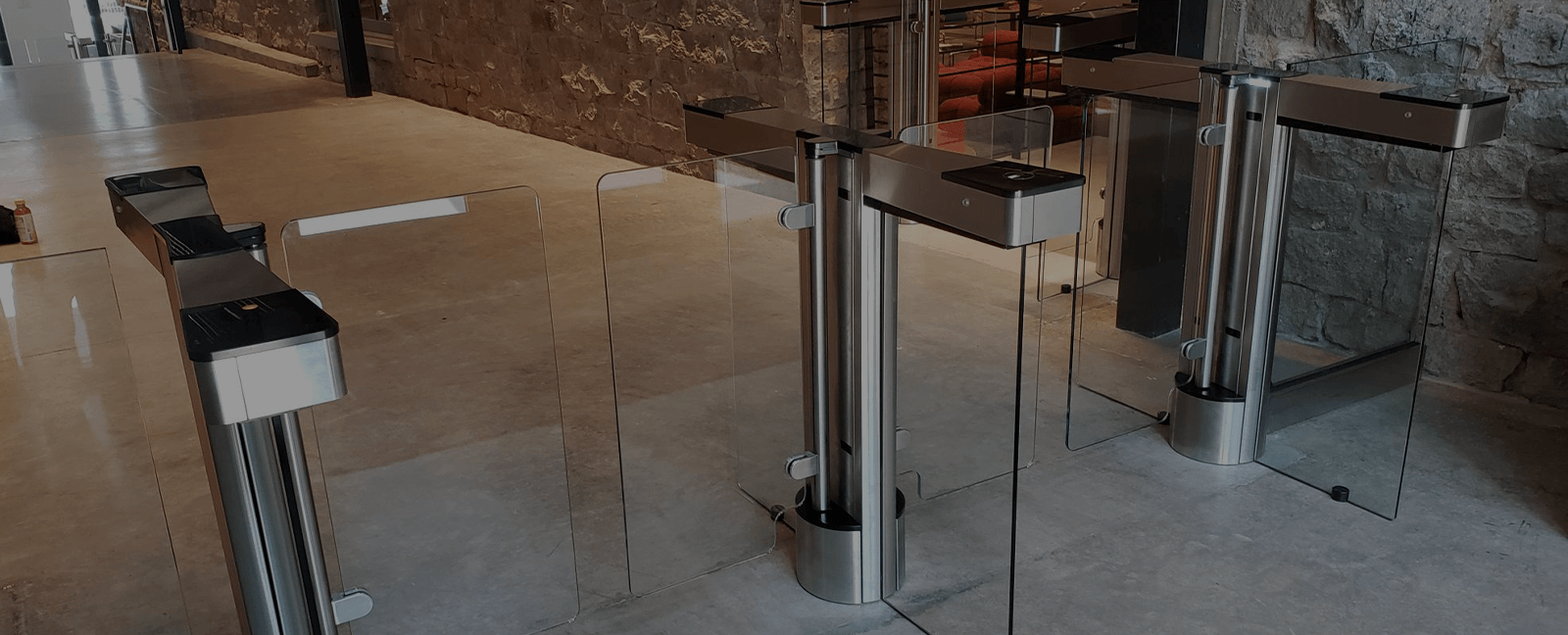
Turnstiles are priced per lane, and the cost of a lane depends far more on what it has to do than on the brand on the pedestal. Six factors move the number. The first is barrier type and security level. A barrier-free lane that detects and alarms but doesn’t physically block is the most affordable. Arm barriers cost more, glass barriers more again, and tall force-resistant barriers built to slow a determined intruder sit at the top. A welcoming corporate lobby and a data center perimeter are solving different problems, and the barrier reflects that. On a Fastlane® spec sheet that difference shows up as a force rating: the standard glass barrier breaks away at 120N or more of friction, measured 11.2″ (285 mm) from the shaft axis, and the optional locking brake raises the maximum rated force to 300N or more. Ask any vendor for that number, because a barrier with no published force rating is a barrier nobody has tested against a shoulder. The second is lane width. Standard lanes handle single-file traffic. Extended, ADA, and wider lanes cost more per lane, and the wider models are where Sidegate Detection® does its work. That technology is exclusive to the wider lane models of Fastlane turnstiles from Smarter Security, and it catches two people trying to pass side by side through one lane. Smarter Security offers a wider lane at 47.25″ (1200 mm) for better flow of traffic and large objects, plus extended lanes up to 39.4″ (1000 mm). The third is detection intelligence, and it’s the hardest part of a quote to compare on paper. Many turnstiles rely on basic beam-break sensors that can’t tell a person from a bag or a cart, so they generate frequent false alarms that pull guards toward noise instead of real threats. That’s a running cost most quotes don’t show. Fastlane speed gates have advanced detection built in as standard, identifying each person’s dimensions, contours, and velocity to tell a person apart from a bag being pulled through and detect tailgating as close as a quarter inch apart. Fewer false alarms means your team responds to real events instead of chasing them. The intelligence is part of every lane, not a premium add-on, so the higher detection capability is already paying for itself in avoided guard hours. The fourth is finish and customization. In a Class A lobby the turnstile is an architectural element, so custom pedestal finishes, colors, glass options, and logos all add cost. This is usually the most negotiable driver, because it’s driven by design intent rather than a security requirement. The fifth is readers and credentials. The turnstile is the platform; the readers decide what it costs to authenticate people. Card readers are inexpensive, while mobile, facial recognition, and contactless biometric readers add per-lane cost. Budget readers as a separate line, because the same physical lane can carry very different reader packages. The sixth is integration. Entrance control rarely stands alone. Tying the lanes into your access control system, and often into cameras, visitor management, and building systems, is real project scope that’s easy to underestimate on a retrofit into an occupied building.
The costs beyond the pedestal
The hardware quote is the number everyone anchors on. It’s rarely the number that decides the project budget. Installation is handled by a certified integrator, and the scope varies widely with the site. New construction with the electrical and floor coring planned in is straightforward. A retrofit into a live lobby, with core drilling, power runs, and work scheduled around business hours, costs more and takes longer. One thing that helps here: Fastlane turnstiles run on low voltage with externally mounted power supplies, so aside from connecting the power supply box to a 110vac supply, licensed electricians aren’t required for the lanes themselves, which saves on installation. Integration and commissioning is the testing and tuning that happens before the lanes go live. It protects you from the far more expensive problem of a system that alarms constantly or lets the wrong people through. Ask how site certification and training are handled, and who owns them. Total cost of ownership is where optical turnstiles quietly separate from cheaper alternatives, and where the sticker-price comparison misleads. Fastlane turnstiles are ISO 9001 compliant and, with approved preventative maintenance in regular use, are expected to reach 10,000,000 cycles of operation before electromechanical subassemblies may need replacing. A lane that costs less on day one but needs more maintenance and fails more often can cost more by year five. The honest question is what a turnstile costs to own, not what it costs to buy.
How do turnstile types compare on cost?
Buyers weighing optical turnstiles usually have two other form factors on the table, and each solves a different problem at a different price. Tripod turnstiles are the low-cost option. They’re rugged and familiar, but the three-arm barrier reads as industrial and offers limited tailgate protection. They suit a back-of-house or budget-driven entrance, not a lobby you want to look good. Full-height turnstiles are the maximum-deterrence option, physically preventing pass-through. They cost more than tripods, take significant space, and suit perimeters and unstaffed access points rather than a welcoming front-of-house. Optical turnstiles and speed gates sit between the two on hardware cost and ahead on intelligence and design. They pair detection with a look that fits a modern lobby and move people quickly on higher-throughput models. For corporate, data center, healthcare, higher education, and government entrances, that combination is usually why they win. The cheapest turnstile that doesn’t fit the space, doesn’t stop tailgating, or needs a guard stationed next to it isn’t the cheapest solution.
What you’re actually paying for
Two lanes can carry the same price and be worth very different amounts. The difference shows up across four areas, and it’s the framework worth applying to any quote:
-
- Throughput. A lane that can’t keep pace builds queues at peak and pushes you toward buying more lanes than you need. Fastlane models move up to 60 people per minute.
-
- Safe egress. Building codes in places like California, New York, and Canada increasingly require free exit in an emergency. Lanes set for this release the moment someone on the secure side touches the barrier, so people can leave fast without badging out.
-
- Detection. The security value lives here. Ask what a lane detects and how well it separates a person from a carried object. Every Fastlane lane detects tailgating as close as a quarter inch apart, standard.
-
- Safety. Barriers that close on a person or glass that shatters are real risks. Fastlane lanes are engineered to release safely and work for children and service animals.
-
- Reliability. Cycle life decides what you spend after the purchase. Fastlane lanes are ISO 9001 compliant and rated for 10,000,000 cycles, and have kept running through floods and hurricanes once water receded.
-
- Sustainability. Low energy draw and recyclability lower running cost. Fastlane is accredited with ISO 14001:2015 and eligible to contribute to a LEED scorecard.
-
- Customization. How far a lane bends to your building controls both cost and fit. Pedestal finishes, custom colors, glass options, barrier heights, and logos shape the look, while post-mount reader housings and floor protectors let you add credentials or reconfigure later without drilling the lane or coring the floor.
Questions to ask before you approve a quote
- Is this priced per lane, and what barrier type and lane width does each lane use?
- What’s included in detection, and does it tell a person from a carried object?
- Are readers and credentials a separate line, and does the price cover every authentication method you need?
- Is installation scoped for your actual site, new build or retrofit?
- What is the barrier’s rated force, and is a locking brake included or an option?
- Does the quote include integration and commissioning, or just the hardware?
- What does this cost to own over ten years, not just to buy on day one?
More of these are answered on our frequently asked questions page.
A note on future-proofing
Getting entrance control specified early, before the budget is set and the layout is locked, is where these costs are easiest to control, whether you’re building new or retrofitting an occupied lobby. BIM files and CAD drawings make that easier to do at design stage. Smarter Security backs that with a product warranty of up to 5 years and no limit on the age of lane it will repair, given parts availability. More on that on our technical services page.
Don’t be a stranger, contact us
Questions about the quote process, sustainability, ROI, technical services, or whether we’re the right fit for your space? Contact us and a member of our team will get back to you shortly. You can also see the Class-A high-rise case study on how one New York City building generated a 262% ROI with $779,000 in savings after five years, or browse more case studies.
Frequently asked questions
How much does a turnstile cost?
There is no single price for a turnstile because cost is driven by what the lane has to do, not just the brand on the pedestal. Pricing is set per lane and shaped by the barrier type and security level, lane width, detection intelligence, finish and customization, the readers and credentials chosen, and integration into existing access control. Beyond the per-lane hardware price, the true cost includes installation, integration, and the lifecycle cost of running the lane, so the honest comparison is what a turnstile costs to own over its life, not just to buy on day one.
Why should I look at long-term cost instead of the upfront turnstile price?
The quote is only part of the total. Features like tailgating and side-by-side detection can lower the number of security guards needed at entrances, and reliable lanes save money simply by continuing to work. Fastlane turnstiles from Smarter Security are rated for 10,000,000 cycles of operation before electromechanical subassemblies may require replacing, and are backed by a product warranty of up to 5 years with no limit on the age of lane Smarter Security will repair, given parts availability. A lane that costs less on day one but needs more maintenance can cost more within a few years.
Do turnstiles help meet sustainability and LEED requirements?
They can. Fastlane turnstiles are accredited with ISO 14001:2015, making them eligible to contribute to a LEED scorecard for energy conservation. They are energy efficient at 60 Watts per lane, operate on low voltage with externally mounted power supplies, and are recyclable at the end of their life cycle, which generates long-term savings on utility bills.
What lane widths are available, and how do they affect cost?
Smarter Security offers standard, extended, and ADA lane widths, plus a wider lane at 47.25 inches (1200 mm) for better flow of traffic and large objects, and extended lanes up to 39.4 inches (1000 mm). Wider lanes optimize space by eliminating the need for a separate gate, which can reduce overall cost. Lane width is one of the factors that affects the per-lane price, so matching the width to the traffic and accessibility needs of the entrance controls both cost and performance.
How do turnstiles generate a return on investment?
Turnstiles generate ROI by reducing staffing needs, moving people quickly, and lasting for years. Fastlane turnstiles allow up to 60 people per minute to pass with accurate tailgating and sidegating detection. One Class-A high rise in New York City generated a 262% ROI with $779,000 in savings after only five years. Cost-saving accessories such as SmarterMount and Fastlane floor protectors, along with flexible lane widths, further lower total cost by avoiding coring and adapting to changing security needs over time.
This article was reviewed for accuracy by the Director of Marketing, Shana McCoy Shana McCoy is the Director of Marketing at Smarter Security, the exclusive Americas distributor of Fastlane optical turnstiles and Door Detective® entrance control solutions. With over a decade of experience in the physical security industry, Shana brings deep expertise in entrance control technology, serving clients across corporate, healthcare, education, and government sectors — including more than half of the Fortune 100. Her work spans product marketing, campaign strategy, and content development, with a focus on helping organizations make informed decisions about access control investments.



