

If you manage security for a multi-tenant high-rise, the answer is probably yes — and here’s why.
Destination dispatch is no longer a luxury reserved for the most cutting-edge towers. It’s rapidly becoming the standard for new construction and modernization projects alike. But if you’re still weighing whether it makes sense for your facility, this guide breaks down exactly what destination dispatch does, who benefits most from it, and how it fits into your existing security infrastructure.
What Is Destination Dispatch?
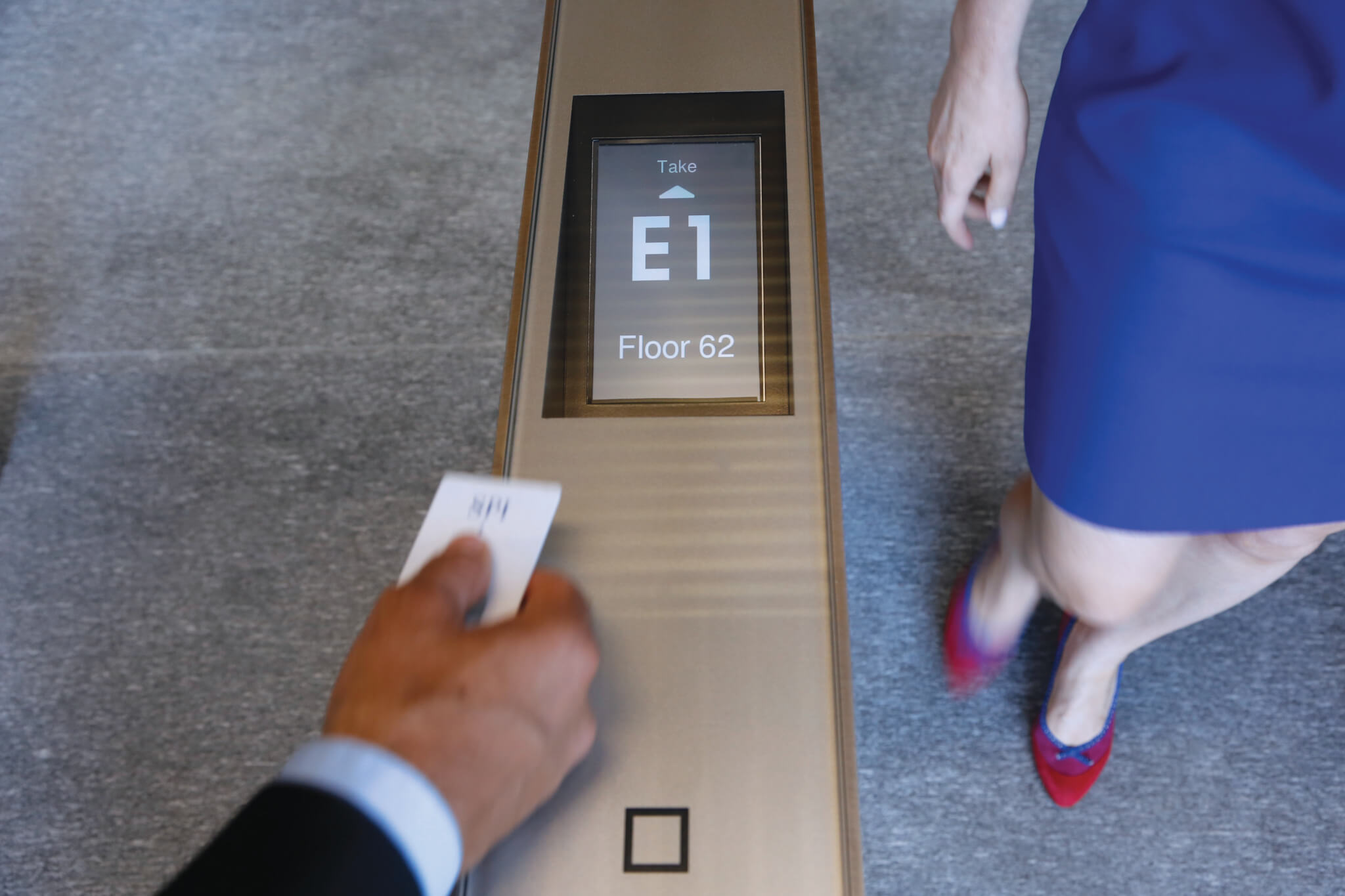
At its core, destination dispatch is an elevator management system that groups passengers by their destination floor rather than responding to traditional up/down call buttons. Instead of pressing a button in the lobby and boarding whatever car arrives first, occupants enter their destination on a keypad or touchscreen — or have it automatically assigned via an access credential — and are directed to a specific elevator car.
The result: fewer stops, faster rides, and smarter use of your elevator bank.
Leading manufacturers like Schindler, KONE, Otis, and thyssenkrupp all offer destination dispatch platforms, and Schindler’s PORT Technology has reported up to a 50% reduction in wait times through destination-based optimization.
Who Needs Destination Dispatch?
Destination dispatch is particularly well-suited for facilities that check one or more of these boxes:
High-rise office buildings with multiple tenants, especially where companies share a building but should not share elevator cars — think competing firms, law firms with confidential clients, or organizations with varying clearance levels.
Corporate campuses and mixed-use towers where access control across multiple floors is a daily operational concern.
Data centers and secure facilities where floor-level access restrictions are non-negotiable.
Buildings undergoing modernization projects looking to retrofit outdated elevator systems with smarter, integrated security solutions.
If your team is managing access control at the lobby level with Fastlane® optical turnstiles but the elevator bank is still operating on an open, on-demand basis, you have a gap in your security posture. Destination dispatch closes it.
4 Reasons to Implement Destination Dispatch
1. Dramatically Improved Passenger Flow
The math is simple: when an elevator knows where everyone is going before the doors open, it can optimize routes across all cars simultaneously. Fewer unnecessary stops means faster rides for everyone.
For high-traffic buildings — particularly during morning ingress and afternoon egress windows — this translates to a noticeably smoother experience. The Building Owners and Managers Association (BOMA) has long identified elevator wait times as a top tenant satisfaction complaint. Destination dispatch directly addresses it.
2. Stronger Floor-Level Access Control
This is where destination dispatch earns its place in your security stack.
Traditional elevator call buttons don’t know who’s pressing them. Destination dispatch does. When integrated with your access control system, the system can verify credentials before assigning an elevator — and it can restrict users to only the floors they’re authorized to access.
This creates what’s known as an inter-floor matrix dispatch system: the building is segmented into zones, and occupants can only travel within their approved segments. A visitor cleared for floors 3–5 simply cannot reach floor 12, no matter how persistent they are at the panel.
This is especially valuable in multi-tenant buildings where competitive companies share the same address. The elevator itself becomes part of your access control perimeter.
3. Dynamic Emergency Guidance
The laminated sign that says “Do Not Use Elevators in Case of Emergency” isn’t doing much for your tenants in an actual crisis.
Destination dispatch systems can shift from routine operation to emergency mode in real time — displaying floor-specific evacuation instructions, directing occupants to stairwells, and communicating live updates to anyone approaching the elevator bank. Static guidance becomes dynamic, which matters when seconds count.
This capability also supports compliance with life safety codes and can be factored into your overall emergency response planning.
4. Seamless Integration with Your Existing Security Ecosystem
Here’s the piece that often surprises facilities managers: destination dispatch doesn’t require you to rip out your existing infrastructure.
Smarter Security partners with all major elevator manufacturers to integrate Fastlane® optical turnstiles directly with elevator dispatch systems — creating a unified, “single pane of glass” security experience. Occupants badge through the turnstile and receive their elevator assignment automatically. No secondary keypad. No redundant credential check. Just a seamless flow from lobby to floor.
Many configurations mount the elevator dispatch display directly within the turnstile pedestal itself, keeping the lobby clean and the user experience intuitive. Not all Fastlane models are equally suited for elevator dispatch integration, so it’s worth discussing your specific layout before specifying a solution.
What About Retrofits?
One of the most common questions we hear: Can destination dispatch be added to an existing elevator system?
Yes — and it’s increasingly common. Many buildings are retrofitting destination dispatch as part of broader lobby modernization projects, often timed with turnstile upgrades or access control system replacements. Bundling these projects is cost-effective and minimizes disruption.
Contact our team to talk through what a retrofit integration looks like for your building.
Frequently Asked Questions
What is destination dispatch in elevators? Destination dispatch is an elevator management system that assigns passengers to a specific elevator car based on their destination floor, rather than responding to a standard up/down call. It improves efficiency, reduces wait times, and enables floor-level access control when integrated with a credential management system.
How does destination dispatch improve building security? By linking elevator access to verified credentials, destination dispatch ensures that occupants can only reach floors they are authorized to visit. It eliminates the ability to tailgate to a restricted floor and supports segmentation between tenants or security zones within the same building.
Can destination dispatch integrate with optical turnstiles? Yes. Smarter Security integrates Fastlane® optical turnstiles with leading elevator dispatch platforms from manufacturers including Schindler, KONE, Otis, and thyssenkrupp. Occupants badge through the turnstile and receive an automatic elevator assignment — no secondary interaction required.
Is destination dispatch only for new construction? No. Destination dispatch can be retrofitted into existing elevator systems and is increasingly common in building modernization projects. It’s often paired with lobby upgrades that include new turnstiles or access control infrastructure.
What buildings benefit most from destination dispatch? Multi-tenant high-rises, corporate campuses, data centers, government facilities, and any building where floor-level access restrictions are operationally or legally required benefit most from destination dispatch.
The Bottom Line
Destination dispatch does two things exceptionally well: it moves people faster, and it moves only the right people. For any facility managing meaningful foot traffic across multiple floors and tenants, that combination is hard to argue with.
If you’re already investing in lobby-level entrance control with Fastlane® optical turnstiles, destination dispatch is the logical next layer — extending your access control posture from the lobby all the way to the floor.
Ready to explore what integration looks like for your building? Download the Smarter Security product brochure or contact our team to start the conversation.
This article was reviewed for accuracy by the Director of Marketing, Shana McCoy
Shana McCoy is the Director of Marketing at Smarter Security, the exclusive Americas distributor of Fastlane® optical turnstiles and Door Detective® entrance control solutions. With over a decade of experience in the physical security industry, Shana brings deep expertise in entrance control technology, serving clients across corporate, healthcare, education, and government sectors — including more than half of the Fortune 100. Her work spans product marketing, campaign strategy, and content development, with a focus on helping organizations make informed decisions about access control investments.



