
Campus safety is a top priority for educational institutions and families alike. With rising concerns about unauthorized access, violence, and other security challenges, universities are increasingly turning to campus safety turnstiles and other innovative solutions to protect their students and staff. Among these solutions, turnstiles have emerged as a game-changer in campus security.
Turnstiles provide a powerful combination of physical barriers and integration with advanced access control systems, creating a secure environment that effectively deters unauthorized entry into university facilities. Let’s explore five key ways turnstiles significantly improve campus safety and security.
1. Controlled Access: The First Line of Defense
Turnstiles serve as a formidable physical barrier, allowing entry only to authorized individuals. By integrating turnstiles with sophisticated access control systems, universities can ensure that only students, staff, and approved visitors gain entry to campus buildings.
Advanced Authentication Methods
Modern turnstile systems offer a range of authentication options:
- Card Readers: Allowing access via student or staff ID cards.
- Biometric Scanners: Utilizing fingerprints or facial recognition for secure entry.
- Mobile Credentials: Enabling access through smartphones or smartwatches.
This flexibility empowers campuses to select the most suitable and convenient method for their community.
Time-Based Access Restrictions
Turnstiles can enforce time-based access restrictions, ensuring certain areas remain accessible only during specific hours. This feature not only enhances security but also optimizes resource management by limiting access to buildings that don’t require round-the-clock operation.
Preventing Unauthorized Entry
By implementing controlled access, turnstiles significantly reduce the risk of:
- Theft
- Vandalism
- Other security threats
This proactive approach creates a safer environment for everyone on campus.

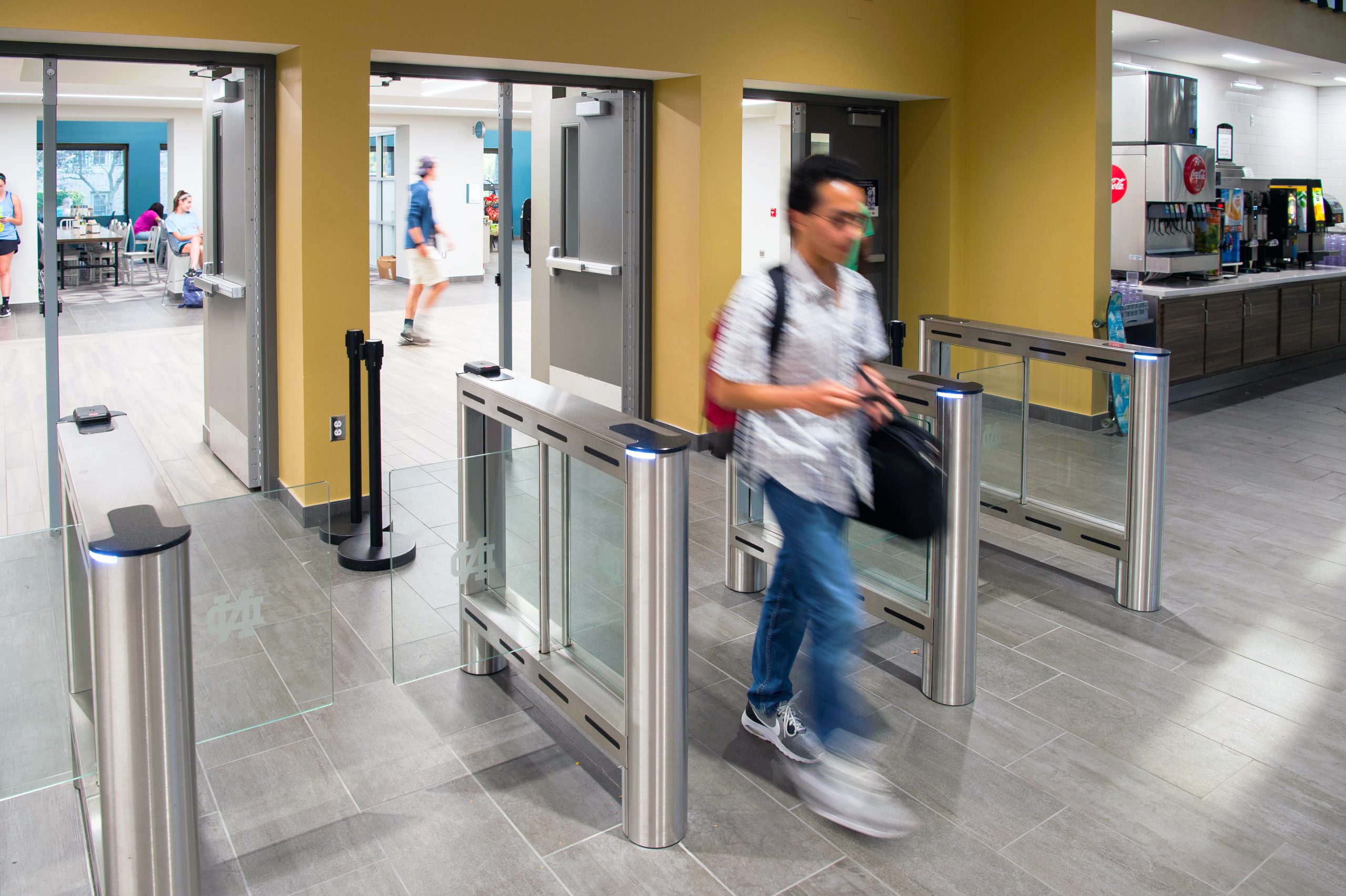
University of Notre Dame secured by Fastlane turnstiles
2. Tailgating Prevention: One Person, One Entry
Turnstiles are designed to allow only one person to pass through at a time. Tailgating occurs when an unauthorized person follows closely behind an authorized individual to gain entry.
One of the most significant benefits of Fastlane turnstiles is their ability to prevent tailgating. These advanced optical turnstiles use sensor beams to detect tailgating attempts. They can spot these attempts from different angles from following behind, side-by-side, climbing over, or any directional violation.
When an unauthorized entry is detected, a visible and audible alert is triggered. The system also notifies security personnel for an immediate response. By consistently preventing unauthorized access, turnstiles help create a culture of security awareness among students and staff. This encourages more vigilance and compliance to access attempts.
3. Efficient Crowd Management
Turnstiles play a vital role in managing large crowds on campus, such as in residence or dining halls. By streamlining entry and exit processes, turnstiles prevent overcrowding by their excellent ability to handle high volumes of traffic. This not only enhances campus safety but also improves order and the overall experience for students and visitors on campus.
Turnstile systems can be programmed to provide valuable data collected from usage patterns and identify peak hours. This empowers institutions to make informed decisions about resource allocation and facility management. Some turnstiles also feature wider lanes to accommodate wheelchair users or individuals with mobility aids, ensuring ADA compliance and inclusive access for all.
4. Integration with Security Systems
Fastlane turnstiles can seamlessly integrate with all types of access control products or security systems. This creates a comprehensive security network while extending the technological capabilities of the turnstiles. Access control extensions can include biometric readers, mobile credentials, and time-based systems.
The integration capabilities extend beyond basic access control. Turnstiles can be connected to video surveillance systems, allowing security personnel to visually verify identities in real-time. They can also be linked to fire alarm systems, automatically unlocking in the event of an emergency for quick evacuation. Certain access control systems even incorporate facial recognition technology in turnstiles, adding an extra layer of security for high-risk areas.
By serving as a central point of integration for various security technologies, turnstiles become a crucial component in creating a smart, responsive campus security infrastructure.
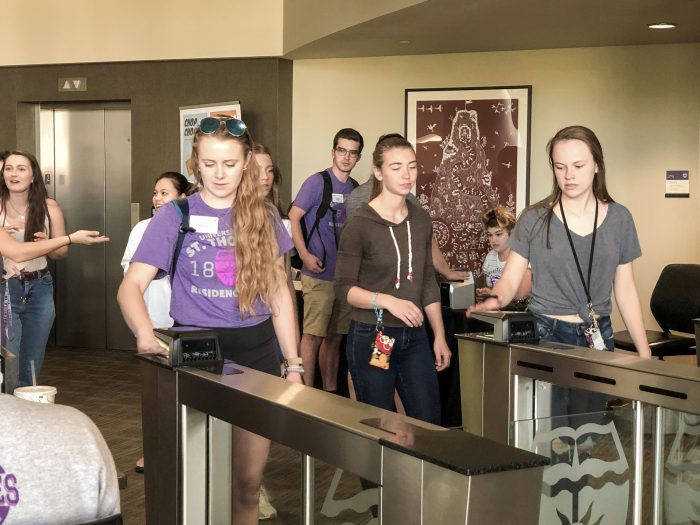
University of St. Thomas dining hall entrance secured by Fastlane Glassgate 150 turnstile with Idemia MorphoWave integration.
5. Solving Challenges in Facilities
Turnstiles offer a range of solutions tailored down to the specific facility served. From residence halls to dining areas, gyms to libraries, each facility presents its own unique set of security challenges and access control requirements. With the right combination of hardware and software, turnstiles can resolve diverse challenges for campus safety.
Turnstiles can help manage high-traffic flow in busy dining halls. They can ensure round-the-clock security in residence halls. Additionally, they can control access in recreation centers and protect valuable resources in libraries. The power of modern turnstiles lies in their ability to tailor solutions to meet specific needs.
With this flexibility, campus administrators can implement a cohesive security strategy across different facilities. By providing this level of customization, turnstiles not only enhance overall campus safety and security but also improve operational efficiency and user experience in each distinct area they serve.
- Dining Halls: Dining halls often experience high traffic during meal times, making efficient access management crucial. Turnstiles integrated with meal plan systems can ensure only authorized students with valid meal plans enter, manage peak traffic flow efficiently, prevent unauthorized sharing of meal plans, reduce manual labor, and provide accurate data on dining hall usage for resource allocation.
- Recreation Center: Recreation centers face unique security challenges because of their diverse activities and extended operating hours. Turnstiles in these facilities can control access based on membership status or student ID. They can also adjust access rules during games with ticketed visitors.
- Residence Halls: Residence halls are students’ homes away from home, requiring robust security measures to ensure their safety and peace of mind. Turnstiles in these areas can restrict access to residents and authorized guests only, provide 24/7 entry control without constant staff presence, integrate with student ID systems, and log entry/exit data for security audits and emergency situations.
- Libraries: With valuable resources on the line, turnstiles effectively address library security challenges. Libraries benefit from turnstiles by preventing unauthorized access and potential theft of resources, managing capacity and monitoring occupancy levels, ensuring quiet entry/exit process, and ensuring smooth entry for users, enhancing both security and operational efficiency.

Photo by Peter Ringenberg/University of Notre Dame
A Safer Future for Campus Communities
As educational institutions continue to prioritize campus safety, turnstiles emerge as a powerful tool in creating secure, efficient, and welcoming environments. By providing controlled access, preventing tailgating, managing crowds effectively, integrating with advanced security systems, and offering tailored solutions for diverse campus facilities, turnstiles significantly enhance overall campus safety.
The implementation of turnstiles not only addresses immediate security concerns but also contributes to fostering a culture of safety awareness and accountability among students and staff. This proactive approach to campus security can lead to increased trust in the institution, higher student satisfaction, and a more vibrant campus community.
As we look toward the future of campus safety, turnstiles stand out as versatile, effective components of comprehensive security strategies. By embracing these innovative solutions, educational institutions can create safer environments that support learning, growth, and community engagement for years to come.
This article was reviewed for accuracy by Executive VP of Smarter Security, Clayton Brown
Clayton Brown serves as Executive Vice President at Smarter Security, the leading provider of hand-crafted optical turnstiles, and is a co-founder of ReconaSense, the only FICAM-certified risk-adaptive physical access control solution (RAdPACS) using commercial off-the-shelf (COTS) components. As a member of SIA’s Government Relations Committee and Data Privacy Board, Clayton proudly represents a next-generation of practitioners dedicated to bringing data-driven ideas to existing physical security challenges.



